


Page 33 - Msingi Afrika Magazine Issue 35
P. 33
The Environment


               solutions for issues like

               thermal comfort, durability,        Beyond Borrowed
               and sustainability that are
               perfectly suited to their           Standards: Writing

               surroundings. Importantly,
               these approaches do not just        Our Own Rules for
               benefit the environment but
               also preserve the cultural          Sustainable Design
               identity of communities,

               fostering a stronger sense of       and Construction
               belonging and continuity.

                                                   RONALD MBIU, NAIROBI, KENYA
               For example, in West
               Africa, the tradition of
               using a plaster made from a      One particularly notable example of the local plaster tradition
               mixture of clay, water, cow      involves the use of the Iru or Dawa-Dawa tree (Parkia
               dung, and leteele (botanical     clappertoniana), a staple in West African culture and cuisine.

               name: Ampelopsis cordata)        The empty pods of the Dawa-Dawa tree, when boiled,
               highlights both sustainability   create a natural varnish that is applied to plastered surfaces
               and local ingenuity. This        for enhanced durability and smooth finishing. This natural

               plaster, traditionally used      varnish protects the surface from damage while offering an
               in wall construction, has        aesthetically pleasing gloss that is chemical-free and eco-
               remarkable properties that       friendly.
               modern materials struggle to
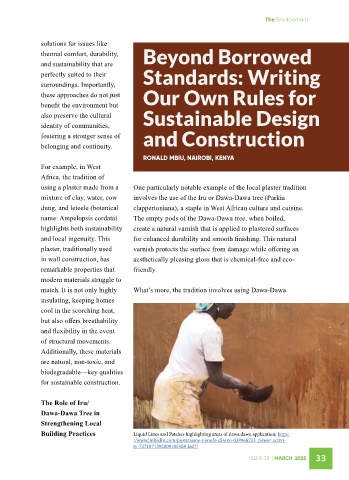
               match. It is not only highly     What’s more, the tradition involves using Dawa-Dawa

               insulating, keeping homes
               cool in the scorching heat,
               but also offers breathability

               and flexibility in the event
               of structural movements.
               Additionally, these materials
               are natural, non-toxic, and
               biodegradable—key qualities

               for sustainable construction.


               The Role of Iru/

               Dawa-Dawa Tree in
               Strengthening Local
               Building Practices               Liquid Lines and Patches highlighting areas of dawa dawa application; https:
                                                //www.linkedin.com/posts/same-nonofo-diseko-038968233_power-activi-
                                                ty-7271871392009105408-Ia07/

                                                                                        ISSUE 35  | MARCH  2025  33

