


Page 35 - Msingi Afrika Magazine Issue 35
P. 35
The Environment


               in building more sustainable and resilient
               environments.


               Local Building Codes: A Necessity for
               Contextual Relevance


               Another significant challenge in construction

               is the prevalence of imported building
               codes from Western countries. While
               these codes often focus on safety and
               regulation, they frequently overlook the

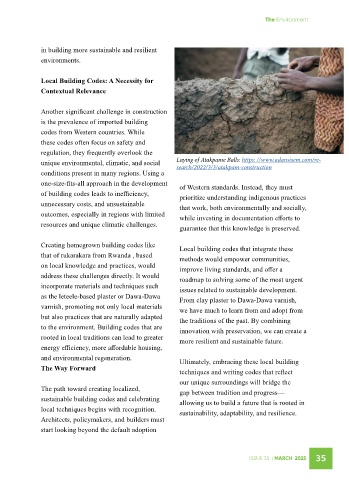
               unique environmental, climatic, and social      Laying of Atakpame Balls: https: //www.adansisem.com/re-
                                                               search/2022/3/3/atakpam-construction
               conditions present in many regions. Using a
               one-size-fits-all approach in the development    of Western standards. Instead, they must
               of building codes leads to inefficiency,         prioritize understanding indigenous practices

               unnecessary costs, and unsustainable             that work, both environmentally and socially,
               outcomes, especially in regions with limited     while investing in documentation efforts to
               resources and unique climatic challenges.        guarantee that this knowledge is preserved.


               Creating homegrown building codes like           Local building codes that integrate these
               that of rukarakara from Rwanda , based           methods would empower communities,
               on local knowledge and practices, would          improve living standards, and offer a
               address these challenges directly. It would      roadmap to solving some of the most urgent

               incorporate materials and techniques such        issues related to sustainable development.
               as the leteele-based plaster or Dawa-Dawa        From clay plaster to Dawa-Dawa varnish,
               varnish, promoting not only local materials      we have much to learn from and adopt from
               but also practices that are naturally adapted    the traditions of the past. By combining

               to the environment. Building codes that are      innovation with preservation, we can create a
               rooted in local traditions can lead to greater   more resilient and sustainable future.
               energy efficiency, more affordable housing,
               and environmental regeneration.                  Ultimately, embracing these local building

               The Way Forward                                  techniques and writing codes that reflect

                                                                our unique surroundings will bridge the
               The path toward creating localized,              gap between tradition and progress—
               sustainable building codes and celebrating       allowing us to build a future that is rooted in

               local techniques begins with recognition.        sustainability, adaptability, and resilience.
               Architects, policymakers, and builders must
               start looking beyond the default adoption


                                                                                        ISSUE 35  | MARCH  2025  35

