


Page 41 - Msingi Afrika Magazine Issue 34
P. 41
The Environment


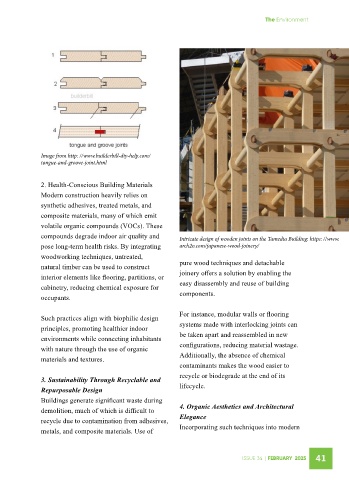
               Image from http: //www.builderbill-diy-help.com/
               tongue-and-groove-joint.html


               2. Health-Conscious Building Materials
               Modern construction heavily relies on
               synthetic adhesives, treated metals, and
               composite materials, many of which emit
               volatile organic compounds (VOCs). These

               compounds degrade indoor air quality and         Intricate design of wooden joints on the Tamedia Building: https: //www.
               pose long-term health risks. By integrating      arch2o.com/japanese-wood-joinery/
               woodworking techniques, untreated,

               natural timber can be used to construct          pure wood techniques and detachable
               interior elements like flooring, partitions, or   joinery offers a solution by enabling the
               cabinetry, reducing chemical exposure for        easy disassembly and reuse of building
               occupants.                                       components.


                                                                For instance, modular walls or flooring
               Such practices align with biophilic design
               principles, promoting healthier indoor           systems made with interlocking joints can
               environments while connecting inhabitants        be taken apart and reassembled in new

               with nature through the use of organic           configurations, reducing material wastage.
               materials and textures.                          Additionally, the absence of chemical
                                                                contaminants makes the wood easier to
                                                                recycle or biodegrade at the end of its
               3. Sustainability Through Recyclable and
               Repurposable Design                              lifecycle.

               Buildings generate significant waste during
               demolition, much of which is difficult to        4. Organic Aesthetics and Architectural
               recycle due to contamination from adhesives,     Elegance

               metals, and composite materials. Use of          Incorporating such techniques into modern


                                                                                      ISSUE 34  | FEBRUARY  2025  41

