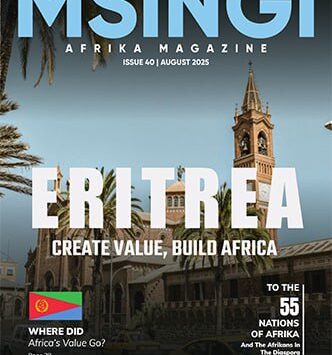



NATION IN VIEW: ERITREA


CREATE VALUE, BUILD AFRICA
The ease of their circumstances does not measure a person’s true value, but rather when faced with the pressure of making a decision, making a choice, or taking a stand for something. It could be a spiritual stand, a moral stand, or even just the need to choose between multiple options. What a man decides on the day of pressure is really what mirrors his values.
What a man chooses to do when faced with the choice between being corrupt in a position of leadership and staying clean is truly a measure of his value. And the measure of value does not only come to us in the place of leadership; it also comes to us even in the place of being followers. The person you choose to follow or the thing or trend you choose to align with also reflects your inner conviction and, thus, your values.
There are times when we are faced with a situation that leaves us with few options to choose from. What must one do? Make a choice that honors the deep values that are ingrained on the inside.
We currently live in a modern world where values have been reduced to how much one has in their bank accounts, what kind of cars one drives, the neighborhood one lives in, and not the beauty of character and a good heart. So, the rich man is valued and respected, even if his riches are derived from crime and corruption, while the poor man with a good heart is overlooked, despised, and not recognized. And now we have a massive population of Gen Zs who now think that the value of their skills or mental ability is how many followers they have on TikTok, forgetting that the person who created TikTok does not have multiple heads. We are in danger of becoming a valueless continent as we keep putting our values on worthless things and ideologies that are just crumbs falling from the tables of those who created the system that has kept Africa where it is.
But this lack of value for what should be valued is also manifesting in how we deal with our natural resources in Africa. We find some measure of temporary satisfaction in exporting raw materials from Africa to Europe and other places of the world without any form of value addition. It makes us happy when the World Bank gives us some useless accolades. They use terms like “fast-growing economy”, “the GDP of so-and-so country will be up by 6% in so-and-so year”, etc. So, while their accolades sound sweet to our colonized mind, we don’t take the time to walk on the street to see the real state of things. So, we sell cocoa to America and Europe at dirt-cheap prices and buy back chocolate at premium prices. But it’s the same cocoa. The difference is simply found in the value that one side chose to add to the cocoa. But that difference, no matter how we undermine it, is what keeps the economy of Europe and America vibrant, and that of Africa, low. But Africa cannot continue to sell out like this, while we complain of a lack of growth on the continent.
Africa’s economies remain deeply tied to the export of raw materials and semi-processed intermediate goods, rather than finished products. This reliance constrains growth, job creation, and resilience to global commodity shocks.
• In 2022, intermediate goods exports (mostly raw or semi-processed minerals and agricultural inputs) reached about US$312 billion, up from $196 billion in 2019—an average annual growth of roughly 16.8%. Over the same period, intermediate goods made up 77% of all Africa’s non-fuel merchandise exports (the highest share globally)
• By 2024, primary goods (i.e., everything except manufactured goods) accounted for 76.8% of Africa’s total merchandise exports, with fuels alone making up 33.6%
Other regional data (2022 for Sub-Saharan Africa) further illustrate the imbalance:
• Raw materials exports: US$196.8 billion (49.7% of total exports)
• Intermediate goods exports: US$117.0 billion (29.5%)
• Consumer goods exports: US$61.0 billion (15.4%)
• Capital goods exports: US$21.1 billion (5.3%)
These figures reveal that nearly half of Sub-Saharan Africa’s export value in 2022 derived from raw materials.

attractions-things-to-do/
Why Value Addition Matters
1. Higher export earnings per unit
Refined or manufactured goods fetch significantly greater prices than raw inputs. For example, exporting processed cocoa into chocolate, rather than beans, multiplies value substantially. Also, outside of just the financial reward that the export of valued-added goods brings, I think there is also mental satisfaction a person gets when they see their raw material become a finished exportable good. It’s like the joy an artist gets from a finished work of art. It’s priceless.
2. Job creation and skills development
Manufacturing and processing generate jobs across the value chain—from logistics to packaging to quality control. Countries such as Benin are investing in “farm to fashion” cotton apparel processing, aiming to boost industrial capacity fivefold by 2030. Burkina Faso has recently also been very active in building its manufacturing sector, and this should be replicated across the continent of Africa. We have no right to complain about the lack of jobs for our growing youth if we do not engage actively in our manufacturing industries. Where are they supposed to get the jobs from, especially if our economic policies kill new ideas even before they are implemented?
3. Stability and diversification
Commodity prices are volatile. Reliance on raw exports leaves economies exposed to global price swings. By diversifying into value-added goods, countries build resilience and reduce vulnerability.
4. Intra-African trade and regional integration
Currently, intra-African intermediate goods trade is very low—only 12.8% of Africa’s total intermediate exports in 2022 were destined for other African countries. Enhancing domestic processing enables richer intra continental trade and unlocks regional production chains. Pan-Africanism becomes a useless term if we cannot even trade among ourselves. But we should trade among ourselves. Why? Trade among people doesn’t always end up as just trading of goods and services; they also come with the interchange of cultures, ideologies, skills, intermarriage, and the host of other things that a vibrant community of people offers.
Encouraging Signs
• Some nations are beginning to shift: Egypt doubled industrial exports like cement and fertilizers between 2022 and 2024, up 350% since 2019—supported by public infrastructure investment and favorable energy prices.
• Zimbabwe and others are imposing export restrictions on raw critical minerals like lithium and cobalt to develop local refineries, and saw export revenues grow from US $70 million in 2022 to US $600 million in 2023 in one case.
Investing in value addition through processing, manufacturing, and intra African trade can convert Africa’s rich resource base into sustainable growth. Efforts like AfCFTA, regional industrial hubs, and national policies to refine and process raw materials are key levers to unlock higher incomes, employment, and resilient economies.
By prioritizing value addition, African nations can escape the trap of being mere commodity exporters and chart a course toward richer, more diversified economies.
Facts about Eritrea
GENERAL OVERVIEW
Location & Geography: Eritrea is located in the Horn of Africa, bordered by Sudan (west), Ethiopia (south), Djibouti (southeast), and the Red Sea (east). It has over 1,200 km of coastline and several islands including the Dahlak Archipelago.
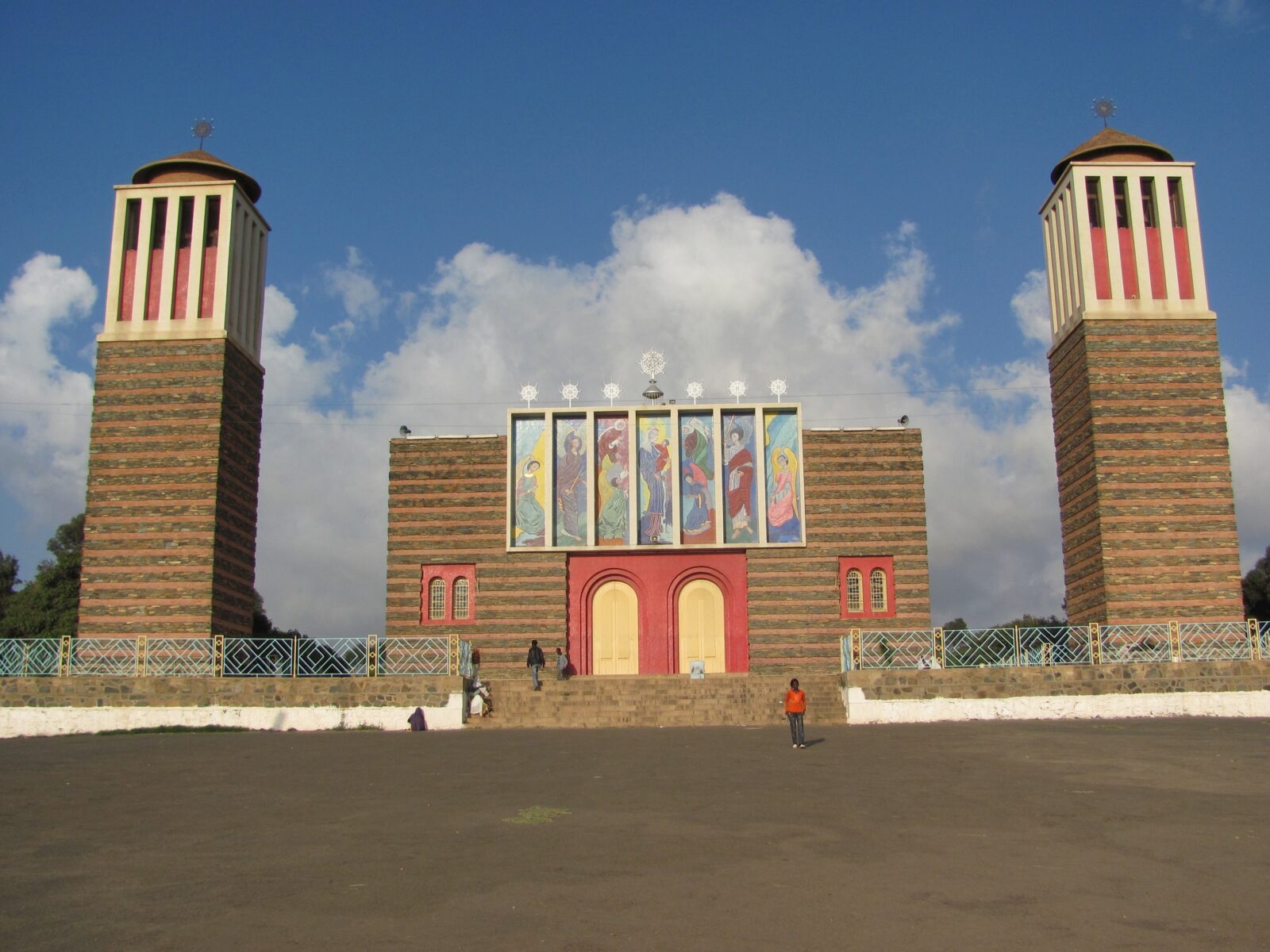
Capital: The capital city is Asmara, known for its well-preserved Italian colonial architecture.
Population: Eritrea has an estimated population of 3.6 to 6 million, with exact numbers uncertain due to the absence of recent national censuses.
Ancient Civilization: Eritrea was part of the Kingdom of Aksum (c. 100 AD–940 AD), one of the great civilizations of the ancient world. Its port city Adulis was a major hub for trade between Africa, Arabia, and the Mediterranean.
Ottoman Rule: The Ottoman Empire controlled parts of coastal Eritrea from 1557 to the late 1800s.
Italian Colonization (1890–1941): Eritrea was officially declared an Italian colony in 1890. Asmara became a model colonial city, and the country was integrated into Italian East Africa in 1936.
British Military Administration (1941–1952): Following Italy’s defeat in WWII, the British administered Eritrea until its future was decided by the UN.
Federation with Ethiopia (1952): Under a UN resolution, Eritrea was federated with Ethiopia in 1952 as an autonomous region.
Annexation by Ethiopia (1962): Ethiopia, under Emperor Haile Selassie, annexed Eritrea, abolishing its autonomy, which sparked a 30-year armed struggle for independence.
Eritrean War of Independence (1961–1991): Led by groups like the Eritrean Liberation Front (ELF) and later the Eritrean People’s Liberation Front (EPLF), Eritreans fought for independence from Ethiopian rule.
Independence (1991/1993): Eritrean forces captured Asmara on May 24, 1991. A UN-supervised referendum in 1993 resulted in 99.8% voting for independence, which was officially recognized on May 24, 1993.
Border War with Ethiopia (1998–2000):
A major border conflict with Ethiopia over the town of Badme resulted in tens of thousands of deaths. A peace agreement was signed in Algiers in 2000, though tensions remained high for years.
Peace Agreement (2018):
Eritrea and Ethiopia signed a historic peace agreement in July 2018, ending two decades of hostility.
One-Party State: Eritrea has been governed by President Isaias Afwerki since independence. The People’s Front for Democracy and Justice (PFDJ) is the only legal political party. No national elections have been held since 1993.
Fossil Find: In 1998, an international team of paleoanthropologists discovered a one-million-year-old skull in the Afar region of Eritrea. The remains bear traits of both the Homo Erectus and Homo sapiens, which pushed back the development of modern human morphology by around 300,000 years. Until this discovery, the oldest fossils featuring human traits dates back 600,000 years.
Ethnic Diversity: Eritrea has nine recognized ethnic groups, including the Tigrinya (largest), Tigre, Saho, Afar, Bilen, Beja (Hedareb), Nara, Kunama, and Rashaida.
Languages: Eritrea has no official language, but Tigrinya, Arabic, and English are used for government and education. Many indigenous languages are spoken.
Religion: The population is roughly 50% Christian (Orthodox, Catholic, Protestant) and 50% Muslim, reflecting a long history of religious coexistence.
Traditional Music & Dance: Eritrean music blends African and Middle Eastern influences. The kraar (lyre) and kebero (drum) are traditional instruments. Dance is integral to ceremonies and varies by ethnic group.
Cuisine: Eritrean food is similar to Ethiopian cuisine, featuring injera (sourdough flatbread) and zigni (spicy stew). Italian influence remains strong, especially in Asmara’s cafés and pasta dishes.

com/asmara-eritrea-attractions-things-to-do/
Coffee Ceremony: A vital social tradition, the Eritrean coffee ceremony involves roasting beans, brewing coffee in a jebena (clay pot), and serving it in small cups – often with popcorn or incense.
In 2017, Asmara was declared a UNESCO World Heritage Site for its unique Modernist and Art Deco architecture, built primarily during Italian colonial rule.
Archaeological Sites:
Sites like Qohaito, Adulis, and Matara are remnants of ancient Aksumite and pre-Aksumite civilizations, some dating back to 700 BCE.
Prayer for Eritrea
I pray for you, beautiful and strong nation of Eritrea, may you continue to rise as a beacon of hope, resilience, and strength in Africa. May the dark days of war and bloodshed never again manifest in your land, and may the peace and independence you now enjoy not be trampled by selfish and self-seeking leaders.
The pain and tears you went through for multiple decades of war should not be in vain. It should create in you and your social fabric real value for peace, human life, and a thriving community devoid of the chaos and selfish tendencies that create enmity between people.
You have fought hard for your freedom—hold onto it, and continue to be blessed and sustained by the wealth of your homeland.
Amina!!!
What's Your Reaction?